

I’d start with a meal you already enjoy - not assume one hybrid meat format is best. These 6 formats offer familiar ways to try Cultivated Meat blends, but they are not proven consumer favourites.
Hybrid products mix Cultivated Meat with plant ingredients, conventional meat or both. Here’s how I’d choose:
- Burgers: for a side-by-side taste comparison. Producers are currently solving taste challenges to ensure these blends meet consumer expectations.
- Meatballs: for small portions in sauce.
- Mince: for chilli, bolognese or cottage pie.
- Sausages: for breakfasts and traybakes.
- Nuggets: for bite-sized tastes with a dip.
- Dumpling fillings: for shared, wrapped portions.
My checklist: compare the Cultivated Meat percentage, ingredients, allergens, price per portion, and protein, salt and saturated fat per 100 g. Then follow the product’s cooking and storage instructions.
<u>Familiar shape does not mean identical cooking or nutrition.</u> Before buying in the UK, I’d also check that the product is authorised for sale as food; approval alone does not mean it is available.
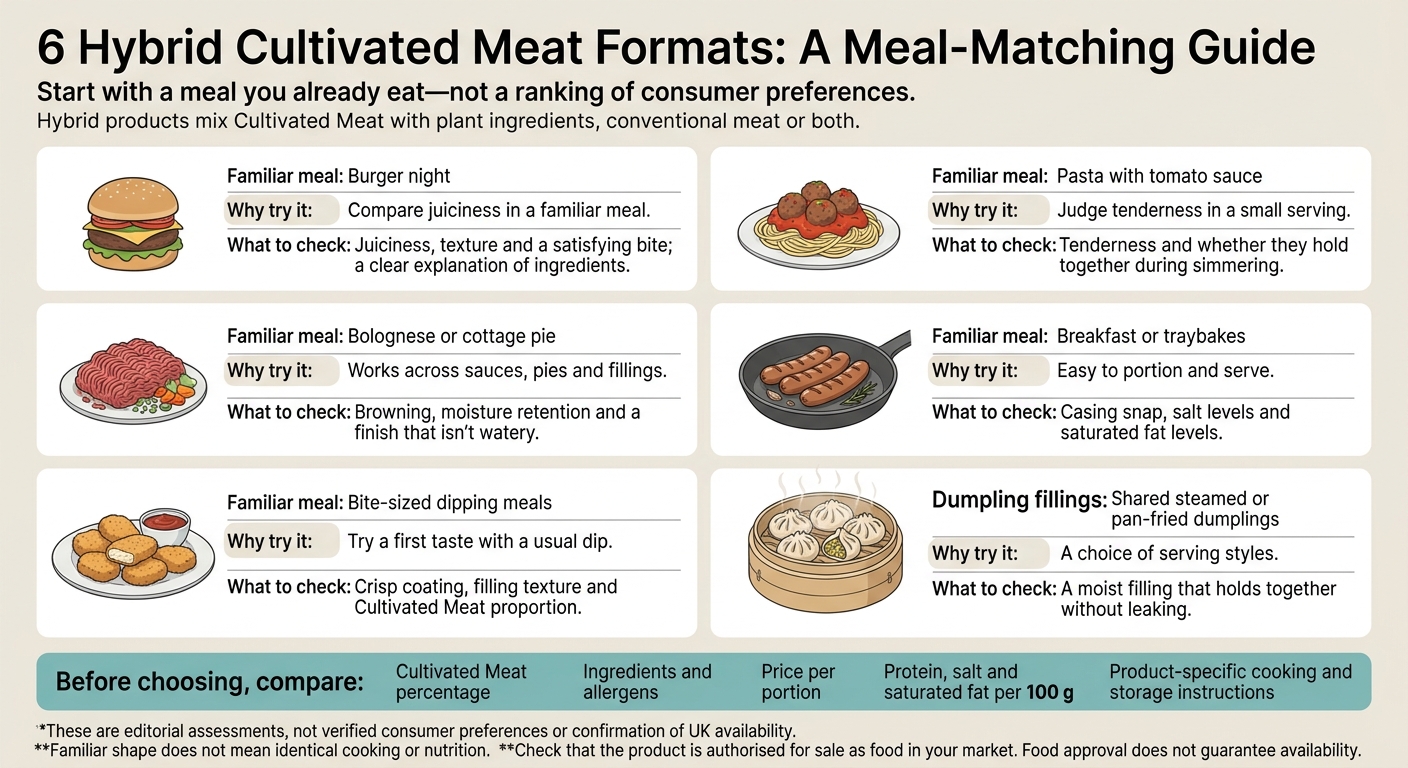
6 Hybrid Cultivated Meat Formats: A Meal-Matching Guide
Product development in cultivated meat: Why hybrid products will likely be the first step to market
sbb-itb-c323ed3
6 Hybrid Cultivated Meat Formats at a Glance
The table below shows how each format fits into a familiar meal and what shoppers may notice first.
| Format | Familiar eating occasion | Why it feels low-pressure | Main consumer advantage | Potential concern to address |
|---|---|---|---|---|
| Burgers | Burger night | Familiar bun-and-toppings set-up. | Compare juiciness in a familiar meal. | Juiciness, texture and a satisfying bite; a clear explanation of ingredients. |
| Meatballs | Pasta with tomato sauce | Small portions served in sauce. | Judge tenderness in a small serving. | Tenderness and whether they hold together during simmering. |
| Mince | Bolognese or cottage pie | Fits an established recipe. | Works across sauces, pies and fillings. | Browning, moisture retention and a finish that isn’t watery. |
| Sausages | Breakfast or traybakes | Straightforward individual portions. | Easy to portion and serve. | Casing snap, salt levels and saturated fat levels. |
| Nuggets | Bite-sized dipping meals | Small, easy-to-try pieces. | Try a first taste with a usual dip. | Crisp coating, filling texture and Cultivated Meat proportion. |
| Dumpling fillings | Shared steamed or pan-fried dumplings | Wrapped portions suit sharing. | A choice of serving styles. | A moist filling that holds together without leaking. |
These are editorial assessments, not verified consumer preferences or confirmation of UK availability. Products would still need the relevant novel food authorisation before sale.[6]
When products become available, check allergen concerns, nutrition, storage requirements and product-specific cooking instructions. Don’t assume they cook exactly like their conventional counterparts.
1. Hybrid Cultivated Meat Burgers
Burgers make the easiest first comparison because you already know the format.
Familiar meals and cooking methods
Start with a standard cheeseburger so the patty is the only variable. Pan-frying, grilling or air-frying all suit a first try, if the pack allows them. Use the same bun and toppings for the hybrid and conventional burgers, but follow each patty’s cooking instructions.
Portion choices
A single patty or mini slider, where available, lets you try the burger before committing to a multi-pack.
Texture and flavour
Look for a browned surface, a patty that holds together and a moist centre with a firm bite. Don’t press it while cooking: that pushes out moisture. Proper searing enhances flavour without drying out the meat. Once you’re happy with the bite, check the label to see which ingredients helped create it.
Consumer evidence and ingredients
Labels can affect how people rate the same burger. In a 2020 Dutch taste test, 193 participants rated identical beef hamburgers differently depending on the label. The Cultivated Meat label scored slightly higher for taste, but no differences were reported in appearance, colour, smell, tenderness, juiciness or aftertaste.[8]
“Hybrid” doesn’t mean one fixed recipe. Check the stated Cultivated Meat percentage, then see what makes up the rest: plant proteins, vegetables, grains, binders, oils, seasonings or conventional meat. Compare protein, salt and saturated fat per 100 g.
2. Hybrid Cultivated Meat Meatballs
Burgers may be the obvious first try, but meatballs offer a smaller, sauce-led option.
Familiar meals and cooking methods
Hybrid Cultivated Meat meatballs work well in spaghetti, sandwiches or on a shared platter. Follow the pack instructions: baking, pan-frying and simmering in sauce each affect browning, tenderness and cooking time.
Portion choices
Two or three meatballs can make an easy first taste, though portion sizes vary.
Texture and flavour
Look for tenderness, juiciness and enough structure to stay together when lifted or simmered. A good meatball should hold its shape without feeling rubbery, dry or too dense. This ensures they compare well to traditional meat in terms of texture and eating experience. Sauce and herbs can add familiar flavours.
Consumer evidence and ingredients
Check the ingredient list for binders and ingredients that retain moisture. Then read the allergen information carefully: don’t assume the product contains - or is free from - egg, wheat, soya or milk.
The same label checks apply to every hybrid format below.
3. Hybrid Cultivated Meat Mince
Familiar meals and cooking methods
Hybrid Cultivated Meat mince could work in chilli, bolognese and cottage pie without changing the meal. You can keep familiar seasonings, such as cumin or oregano.
Browning may add savoury flavour, but follow the product instructions for pan heat, oil, cooking time and whether to thaw it first. Mince could suit both quick dinners and larger batches.
Portion choices
Loose mince lets you choose portions for small meals or batch cooking. Before planning freezer meals, check the freezing instructions, shelf life and reheating rules.
Texture and flavour
The texture needs to match the dish: distinct pieces for chilli, a softer result for bolognese and a filling that holds together in stuffed peppers.
Moisture matters, too. Too little can leave mince dry and crumbly. Too much can thin sauces and prevent browning.
Consumer evidence and ingredients
Familiar mince dishes can make this format easy to try, but texture and the balance of ingredients still determine the result.[3] Check the Cultivated Meat share and other ingredients, along with protein, saturated fat and salt per serving. Read the pack’s storage and cooking instructions, too.
Next, sausages offer another familiar format with simple portion control.
4. Hybrid Cultivated Meat Sausages
Familiar meals and cooking methods
Hybrid sausages may blend Cultivated Meat with plant proteins, conventional meat or both. The label should make that mix clear. Serve them in a cooked breakfast, a bun, a traybake or bangers and mash.
Grill, fry, bake or barbecue as directed on the pack. The casing and fat content affect splitting, browning and cooking time.
Portion choices
Two breakfast sausages, one larger sausage in a bun or sliced sausage in pasta all offer easy first portions.
Texture and flavour
A convincing sausage needs casing snap, a firm filling and a juicy - not greasy - bite. The cooking aroma matters too, along with familiar seasonings such as sage and pepper.
Check whether the casing is animal-derived, plant-based or synthetic, and which ingredients provide richness, structure and binding. Once the bite feels right, look at the nutrition panel and allergens as part of your sustainable eating habits.
Consumer evidence and ingredients
Check salt and saturated fat per 100 g and per serving, plus allergens such as wheat, soya or mustard. Cultivated Meat does not automatically make a sausage healthier; processed meats can still be high in salt and saturated fat.[9]
For a smaller first taste, nuggets are the next low-pressure format.
5. Hybrid Cultivated Meat Nuggets
Familiar meals and cooking methods
Nuggets are a familiar finger food for midweek meals, lunchboxes or sharing platters. Follow the cooking instructions on the pack, including the stated time and temperature. Only oven-bake, air-fry or shallow-fry if directed.
Portion choices
Try one or two nuggets with your usual meal before choosing a full serving. A familiar dip may make that first taste easier, but check its salt, sugar and allergen content too.
Texture and flavour
Look for a crisp crumb and check how thick the coating is. Then assess the filling’s texture: is the centre juicy, soft or firm?
Consumer evidence and ingredients
Studies suggest that clear product information and tasting the nuggets directly improve attitudes towards Cultivated Meat nuggets, helping people make an informed first try.[10][7] The pack should say whether the product contains Cultivated Meat and, where relevant, state its percentage in the finished product.
Don’t rely on the word “hybrid”. Read the full ingredients list, allergen information and storage guidance to understand cultivated meat vs. conventional meat food safety standards.[11][12][13]
If you’d prefer a wrapped option, dumpling fillings offer another familiar way to try it.
6. Hybrid Cultivated Meat Dumpling Fillings
Familiar meals and cooking methods
After nuggets, dumpling fillings offer another option made for sharing. Hybrid Cultivated Meat fillings could work in crisp-bottomed, pan-fried gyoza, soft steamed dumplings or wontons in broth. Each puts the filling inside a familiar wrapper.
Portion choices
A shared platter could give diners two or three dumplings to try. This is a tasting suggestion, not a nutritional serving size.
Texture and flavour
Ginger, spring onion, garlic and soy-based seasoning could bring recognisable savoury flavours to a filling made with cultivated meat production and plant ingredients. The centre should feel tender but hold together when bitten.
Drain vegetables and limit added liquid to prevent soggy wrappers. The wrapper needs to hold up, making it just as important as the filling’s texture.
Consumer evidence and ingredients
For any future product, check its sale authorisation, the proportion of Cultivated Meat and which other protein ingredients it contains. Wrappers may contain wheat or egg, while fillings and dips may contain soya or sesame. Check ingredient and allergen details for all three: wrappers, fillings and accompanying dips.
Choose a Format for Your Usual Meals
Start with a meal you already eat. These pairings offer guidance, not a ranking of preferences.
| Usual meal | Suggested format | Practical reason |
|---|---|---|
| Breakfasts and traybakes | Hybrid Cultivated Meat sausages | Ready-portioned, with a familiar shape and cooking methods. |
| Flexible home cooking | Hybrid Cultivated Meat mince | Works in chilli, cottage pie or bolognese. |
| Direct burger comparisons | Hybrid Cultivated Meat burgers | A defined portion makes side-by-side tasting straightforward. |
| Sauce-based meals | Hybrid Cultivated Meat meatballs | Suits meals built around tomato sauce, gravy or curry. |
| Dipping meals | Hybrid Cultivated Meat nuggets | Small pieces let you try a little with a familiar dip. |
| Shared dumplings | Hybrid Cultivated Meat dumpling fillings | Suits shared meals with individually filled parcels. |
A familiar shape doesn’t guarantee the same cooking behaviour or texture.
Before buying, compare ingredients, preparation time, storage instructions and price per portion. Check the Cultivated Meat share, too - not just the format.
Conclusion: Familiar Meals, Clear Product Details
Familiar meals and formats can make that first taste feel less daunting. These six options are starting points, not proven favourites. Whether people buy them again will depend on taste, ingredients, price and trust in safety information.
Before choosing, follow a checklist for understanding labels. Check allergens and confirm that the product is authorised for sale as food in your market. Approval for another use does not count, and food approval does not guarantee availability.[14][15]
For educational guides, product previews and waitlist updates, visit Cultivated Meat Shop. It does not yet sell products, and signing up does not guarantee supply or a launch date.[2][4][5]
FAQs
Why blend Cultivated Meat with plant ingredients?
Blending Cultivated Meat with plant ingredients makes familiar products easier and more affordable to produce. Plant proteins provide structure and help create a meaty look, taste and texture. Using less Cultivated Meat also cuts costs and helps producers scale up production of burgers, nuggets, mince and sausages.
Getting the balance right matters. Keeping plant protein levels in the right range - often around 30% - helps maintain flavour and texture. Too much can reduce both [1][2].
Are hybrid Cultivated Meat products suitable for vegetarians?
No. Hybrid Cultivated Meat products are neither vegetarian nor vegan. They contain real animal cells grown from livestock samples, so they are meat.
Blending these cells with plant-based ingredients improves taste, texture and affordability, but the products still contain animal protein.
At Cultivated Meat Shop, we categorise them as a practical choice for flexitarians who want to enjoy real meat while relying less on conventional animal farming.
How can I verify UK food authorisation?
As of November 2026, Cultivated Meat is not authorised for human consumption in the UK and is not available to buy [1][2]. The Food Standards Agency and Food Standards Scotland manage the authorisation process, which includes a regulatory sandbox [1][2].
Cultivated Meat Shop’s educational updates let you track approval progress and upcoming launches. The first products for human consumption are expected to reach restaurants by 2027 [1][2].


