

When cultivated meat becomes available in UK supermarkets, packaging will be key to keeping it safe, appealing, and long-lasting. Here's what you need to know:
- Preservation: Cultivated meat spoils faster than traditional meat, so advanced methods like Modified Atmosphere Packaging (MAP) and Vacuum Skin Packaging (VSP) will be essential. These techniques extend shelf life by controlling oxygen and moisture levels.
- Consumer Appeal: Packaging will influence how shoppers perceive safety and quality. Features like freshness indicators and recyclable materials are likely to gain traction.
- Sustainability: Efforts to reduce plastic use and adopt biodegradable materials are underway, aligning with consumer demand for eco-friendly solutions.
-
Types of Packaging:
- MAP: Uses gases like carbon dioxide and oxygen to slow spoilage and keep meat looking fresh for up to 14 days.
- VSP: Vacuum-sealed, transparent packaging extends shelf life to 10–14 days while showcasing the product's appearance.
- Flexible Pouches: Cost-effective and durable, ideal for bulk storage and wholesale.
While cultivated meat isn't yet available in the UK, regulatory progress and cost reductions are expected to make it more accessible in the coming years. Packaging innovation will play a major role in its success.
Why Packaging Matters for Cultivated Meat
Preserving Quality and Freshness
Cultivated meat spoils more quickly than conventional meat, making specialised packaging essential to maintain its flavour, texture, and nutritional value [1]. Unlike traditional meat, which benefits from natural preservation processes after slaughter, cultivated meat lacks these protective changes [1].
To address this, packaging must shield the delicate cell structures from breaking down. Techniques like Modified Atmosphere Packaging (MAP) and vacuum skin packaging play a critical role here. By carefully managing oxygen and carbon dioxide levels, these methods slow microbial growth and extend shelf life without sacrificing quality. Sturdy packaging also ensures the product remains intact during transport and storage, safeguarding it throughout the cold chain and storage process. Beyond just protection, such measures help reinforce consumer trust in the product’s reliability.
Meeting Consumer Expectations
Packaging isn’t only about preservation - it’s also about winning over consumers. In the UK, buyers often associate visible freshness and eco-friendly materials with safety and quality [1].
Smart packaging innovations, like colour-changing freshness indicators or ammonia-sensitive films, provide clear, visual confirmation of a product’s freshness. These features address concerns about perishability head-on. Additionally, with many consumers prioritising environmental concerns, the demand for recyclable materials and reduced plastic use is growing. Sustainable packaging design is, therefore, not just a preference but a necessity for gaining acceptance in the market.
sbb-itb-c323ed3
Common Packaging Types for Cultivated Meat
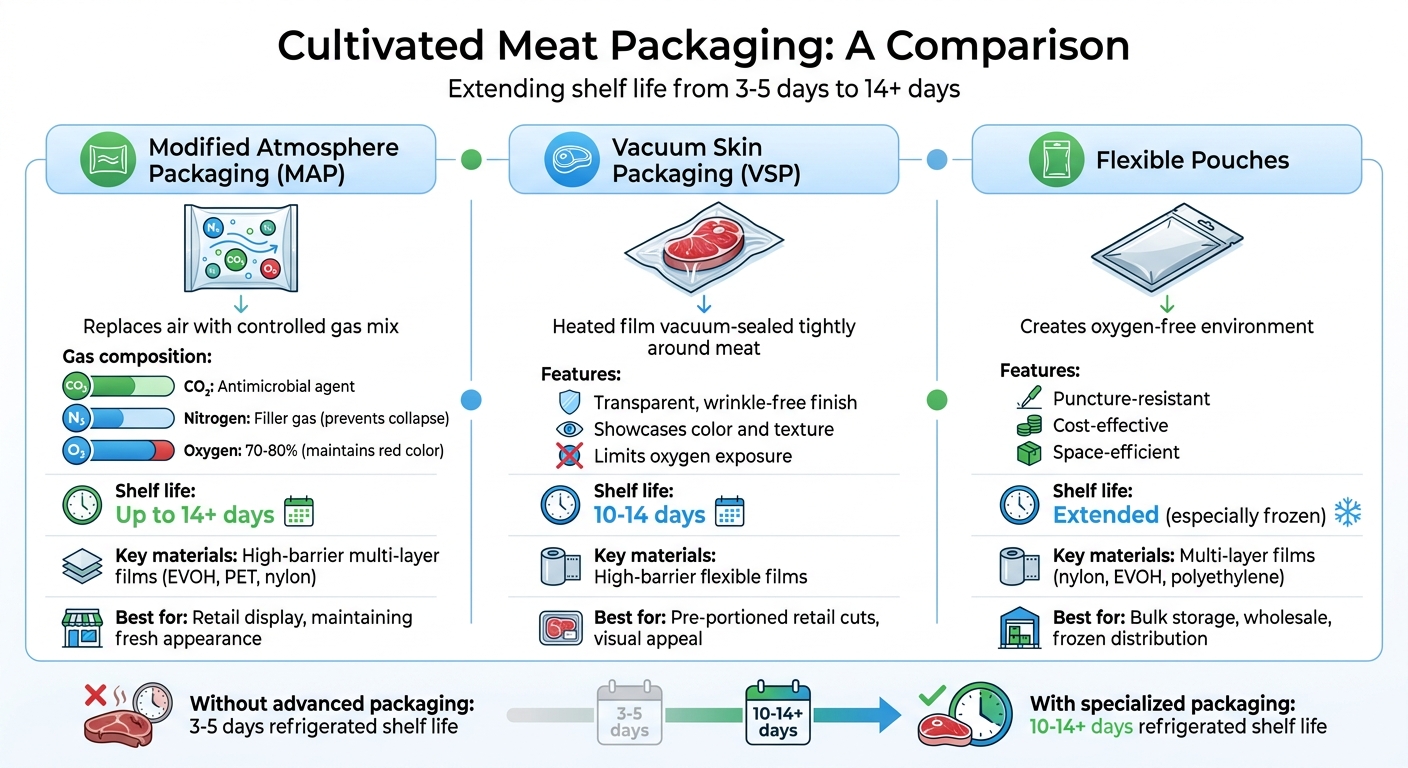
Cultivated Meat Packaging Types Comparison: MAP, VSP, and Flexible Pouches
Modified Atmosphere Packaging (MAP)
Modified Atmosphere Packaging, or MAP, replaces the air inside a package with a carefully controlled mix of gases to help keep meat fresh [2]. Carbon dioxide (CO2) plays a key role here, acting as an antimicrobial agent by dissolving into the meat's surface to slow down bacterial growth. Nitrogen is used as a filler gas to stop the packaging from collapsing when the CO2 is absorbed. For red meat, oxygen is included - usually around 70–80% - to maintain that vibrant cherry-red colour that consumers associate with freshness [2].
Without advanced packaging like MAP, fresh meat can spoil within just 3 to 5 days in the fridge. MAP can extend this shelf life to 14 days or more [2]. This is achieved by using high-barrier, multi-layer films made from materials like EVOH, PET, and nylon, which prevent gas from escaping or mixing with the outside air. These films ensure the internal atmosphere stays stable during transport and storage. Vacuum Skin Packaging (VSP), discussed below, also relies on these high-barrier films to maintain quality.
Vacuum Skin Packaging (VSP)
Vacuum Skin Packaging takes a different approach by forming a tight, transparent layer over the meat [2]. A heated, flexible film is vacuum-sealed around the product, creating a sleek, wrinkle-free finish that highlights the meat's colour and texture. This type of packaging is perfect for pre-portioned, retail-ready cuts, offering both practicality and visual appeal.
VSP can extend the refrigerated shelf life of meat to 10–14 days [2], compared to just 3–5 days with traditional wrapping. This is thanks to the high-barrier films, which limit oxygen exposure and control moisture levels. By addressing the main causes of meat spoilage - microbial growth, oxidation, and physical damage - VSP ensures the product stays fresh for longer.
Flexible Pouches and Bags
Flexible pouches and bags provide another option for packaging cultivated meat, especially when cost and storage space are priorities. These pouches create an oxygen-free environment that slows bacterial growth and reduces oxidative damage. They are particularly effective for bulk cuts, wholesale distribution, and frozen storage, where durability and puncture resistance are critical.
Although flexible pouches may appear wrinkled, they protect meat from freezer burn and optimise storage efficiency. Like MAP and VSP, they use multi-layer films made from materials such as nylon, EVOH, and polyethylene to preserve freshness throughout the cold chain. This makes them a practical choice for large-scale operations and long-term storage needs.
Packaging and Environmental Impact
Recyclable and Reduced-Plastic Materials
The packaging industry is moving away from petroleum-based plastics towards bio-based alternatives that aim to cut down on waste and environmental harm. This transition is especially critical for cultivated meat, given its delicate nature and the need for sturdy packaging to ensure safe transport and storage. Researchers are exploring edible films and coatings made from agrifood residues. These films use natural polymers like starch, κ-carrageenan, and chitosan, which are biodegradable and can either be consumed or composted. Some of these films also include natural additives, such as flavonoids or tea polyphenols, which offer antioxidant and antibacterial benefits to help prolong shelf life. However, the availability of these solutions in the UK will depend on scaling up production and ensuring they align with the country's waste processing systems [1].
Alongside these sustainable materials, advancements in intelligent packaging are helping to tackle food waste more effectively.
Smart Packaging Features
Innovative packaging designs are now incorporating smart features that provide real-time updates on product freshness through visual cues. For instance, some packages use starch-based ammonia-sensitive films, anthocyanin-infused fibre mats, or Janus-structured antibacterial absorbent pads. These materials change colour as chemical changes occur in the meat, signalling spoilage and maintaining product quality. Such features go beyond traditional "best before" dates, offering a clearer and more reliable way to monitor freshness. This is particularly valuable for cultivated meat, where maintaining precise preservation methods is a top priority [1].
What to Expect in the UK Market
Timeline for Availability
Don't expect Cultivated Meat to appear on UK supermarket shelves immediately. Regulatory approvals and high production costs are the main hurdles. Back in 2022, the price of Cultivated Meat was around $10,000 (£7,800) per pound [3]. However, experts anticipate that with increased production, the cost could drop significantly to about $2.50 (£2) per pound by 2032 [3].
The speed of its arrival in the UK largely depends on the country's regulatory framework. Once approved, these products will carry clear labelling to indicate they are Cultivated Meat. Curious about the latest updates? Keep reading for more insights.
Stay in the Loop with Cultivated Meat Shop
As this industry grows, keeping up with developments is crucial. While you can't yet buy Cultivated Meat in the UK, Cultivated Meat Shop is your go-to source for news on packaging, product launches, and regulatory advancements.
From updates on new brands to insights into packaging innovations, Cultivated Meat Shop ensures you're always in the know. By joining their waitlist, you'll get early alerts about product availability, pre-order opportunities, and industry milestones. If you want to be among the first to try Cultivated Meat when it hits UK shelves, signing up is a smart move.
Conclusion
Packaging plays a critical role in maintaining the quality, ensuring the safety, and addressing environmental concerns for cultivated meat.
With its delicate nature, cultivated meat benefits from advanced solutions like modified atmosphere packaging and vacuum skin packaging, which help retain freshness and extend its shelf life. At the same time, the move towards sustainable packaging aligns with growing consumer demand for more responsible and sustainable choices.
As cultivated meat progresses from concept to mainstream, its packaging will likely mirror the same level of innovation and care seen in its production, combining cutting-edge preservation methods with environmentally conscious materials.
For the latest insights and developments in this area, the Cultivated Meat Shop remains a reliable source as this exciting industry continues to grow.
FAQs
Why does cultivated meat spoil faster than conventional meat?
Cultivated meat tends to spoil more quickly than conventional meat due to its high perishability. Its specific composition, along with the absence of natural biological defences, leaves it more prone to microbial growth if not stored or handled with care. To ensure its quality and safety, proper refrigeration and appropriate packaging are absolutely crucial.
Will cultivated meat packaging be recyclable in the UK?
Yes, in the UK, cultivated meat packaging is anticipated to be recyclable. Producers are looking into environmentally conscious options like high-barrier compostable films. These materials are designed to keep the product fresh while reducing waste, striking a balance between maintaining quality and supporting sustainability targets.
How will I know if cultivated meat is still fresh?
To determine if cultivated meat is fresh, pay attention to a few key indicators. Fresh cultivated meat should have a clean, neutral smell, a bright pinkish-red colour, and a firm yet slightly moist texture. Additionally, its packaging should be intact, with no swelling or visible damage.
On the other hand, spoilage can be identified by a sour odour, the presence of grey or dark spots, a slimy texture, or damaged packaging. Always check for signs of mould or unusual discolouration before using it.


